
Obama, Jarrett, Resko all of them, just can't keep their hands off taxpayer money, even to the point of ripping off the very poor Chicagoans whom they claim to so dearly care about..... The Olympic bid was just going to be more of the same, buy cheap slums, tear down, build fewer than called for expensive properties to sell to the wealthy, pocket the rest, crowd the displaced poor into ever tighter and tighter slums, while promising hope and change. Black on Black crime pure and simple.
Steve
+++++++++++++++++++++++++++++++++++++++++++++++++++
By Jim McElhatton
Sen. Barack Obama, who vows to change Washington by trimming wasteful spending and disclosing special-interest requests, wrote the Bush administration last year to seek a multimillion-dollar federal grant for a Chicago housing project that is behind schedule and whose development team includes a longtime political supporter.
Mr. Obama's letter, however, was never disclosed publicly. In fact, the by aletter was ghostwritten for him consultant for the Chicago Housing Authority, which wanted the money - a practice ethics watchdogs have frequently criticized.
The housing project through July had completed fewer than one-sixth of the 439 public housing units it had planned, court records show.
The Bush administration obliged Mr. Obama's request, awarding a $20 million competitive grant last month from the Department of Housing and Urban Development (HUD). It called the project a “shining example” of urban revitalization. The Washington Times learned of the letter from Republican operatives.
As Mr. Obama campaigns for president as an agent of change who promises to clean up Washington's money game, his role in the Stateway project raises questions about the appearance of a conflict of interest and whether he has been participating in the very system he criticizes, watchdogs say.
“It's not just Senator Obama; it's endemic to Capitol Hill. It's a broad issue, where lawmakers are just simply rubber-stamping something through,” said Steve Ellis, vice president of the nonpartisan Taxpayers for Common Sense, referring to the practice of consultants writing funding requests for lawmakers.
“It's sort of like of your standard earmark practice in a lot of ways, where lobbyists end up writing the request letters,” he said. “It's a problem especially if neither the staff nor the lawmaker knows what's going into the request.”
Mr. Obama's aides say he knew the project was worthwhile because it is helping make safe and affordable housing available to hundreds of people displaced by the demolition of public housing complexes.
But complicating the picture, one of developers for the Stateway Project is a firm headed by Allison S. Davis, one of Mr. Obama's early mentors and a longtime political supporter. A founding partner at the firm where Mr. Obama practiced law, Mr. Davis and his family have given the senator from Illinois tens of thousands of dollars in political contributions over the years.
Aides to Mr. Obama said he did not know of Mr. Davis' involvement in the Stateway project when he sent the letter. They noted that none of the HUD money will flow to Mr. Davis or his business. They also said other lawmakers - including fellow Illinois Democrats Sen. Richard J. Durbin and Chicago Mayor Richard M. Daley - sent similar letters to HUD.
“John McCain, Barack Obama and other members of the U.S. Senate have routinely written to executive agencies in support of federal grant requests for programs critical to their constituents. Making safe and affordable housing available to those displaced by the demolition of public housing certainly meets that threshold,” said Obama spokesman Ben LaBolt.
None of the elected officials drafted the letters of support. Rather, the letters were written by an Atlanta-based housing consultant working for Chicago's housing authority.
Though Mr. Obama's office said he didn't know of Mr. Davis' role, ethics watchdogs said he left himself open to creating the appearance of a conflict of interest, a situation senators are encouraged to avoid in their code of ethics.
Whenever a politician seeks help for a project in which supporters are involved, it can “spawn all kinds of traps and minefields,” said Leslie Paige, a spokeswoman for the nonpartisan Citizens Against Government Waste, an advocacy group.
“The appearance of a conflict of interest is almost as bad as a conflict of interest,” she said.
Chicago Housing Authority officials say the practice is nothing unusual and in fact has been going on for years.
James Brooks, the consultant who drafted Mr. Obama's letter, said such letters of support are seen as a “positive sign” by HUD when it doles out grants, though he added that the letters are not in themselves deciding factors.
“This isn't a political process,” he said. “I might add that I wrote those letters myself. They didn't originate from the mayor's office or either of the senators' offices,” Mr. Brooks said in an e-mail. “The final signed letters that are included in the application were changed very little from the drafts that I wrote.”
The Chicago Housing Authority's managing director of development, William Little, called the practice “commonplace.”
“When we or other city agencies request the support of any member of our congressional or state delegation, the mayor or an alderman, we speak with them or their staff about the nature of and reasons for the request,” he said.
“If they agree that the request serves a compelling public purpose and are supportive we then prepare and submit the support letter for their and their staff's review and approval. ... The official and their staff are of course free to edit the letter as they wish.”
However, it's unclear whether Mr. Obama's office sought any additional information about the Stateway project.
“I'm not sure he or his staff would need to review any particular funding application in any detail to understand what we were trying to accomplish with the [grant] application,” Mr. Little said.
“In this instance, Senator Obama and Senator Durbin demonstrated their support of the Chicago Housing Authority´s mission and effort to provide badly needed, safe, sanitary, affordable housing by supporting our request for funding,” he said.
If Mr. Obama or his staff had learned more about the project, it's likely they would also have known of Mr. Davis' involvement, since Mr. Davis' company, the Davis Group, is one of four in the Stateway Associates LLC development partnership, according to the city housing authority's Web site.
Built in 1958, the Stateway site included eight crime-ridden, high-rise buildings with more than 1,600 public housing units. Officials are replacing the towers to make way for a “lower density, mixed-income community,” which they say eventually will include a mix of more than 1,300 market rate, affordable housing and public housing units, according to the housing authority.
The Chicago Tribune reported earlier this year that the development team, which was picked in 2001, had sought to complete 439 public housing units by September 2008. As of July, 58 units had been completed, according to court records.
Asked about the delays, Mr. Little said the project has encountered the same market downturns as elsewhere across the country. He said the development “is no more immune to the effects of the flagging housing market than anywhere else.”
“As sales have slowed, the team´s ability to start buildings - and public housing units - has slowed as well. Likewise, as the market heats up, construction of public housing will heat up as well. In the interim, the team is exploring strategies to improve production, even in this challenging market.”
When he announced the grant last week, HUD Secretary Steve Preston praised the project.
“This site has become a shining example of neighborhood revitalization and illustrates what can be done when there's a commitment to make life better for the families who lived in these communities,” he said.
In his letter, Mr. Obama said the first phase of construction at the Stateway site “has proven successful thus far in contributing to the revitalization of the surrounding community.” He also cited nearby businesses, such as a Starbucks and a FedEx Kinkos.
According to a Tribune report on the Stateway project last year, those businesses sit on property tied to Mr. Davis and his family.
Obama aides said Mr. Obama created no conflict of interest in sending the letter. They said, and city housing authorities confirmed, that HUD grant money won't go to Mr. Davis or his company.
“The request was made with the consultation of city officials, not the developers, and since the overall budget remains the same, the developers will not gain any financial benefit from the grant,” Mr. LaBolt said.
Obama campaign aide Valerie Jarrett also has ties to the project. She is chief executive of the Habitat Co., the federally court-appointed receiver in charge of overseeing several housing authority redevelopment efforts She is not a developer in the project.
Neither Mr. Davis nor Miss Jarrett returned e-mail or phone messages. An assistant for Miss Jarrett said she was unavailable for comment, but added, “She never spoke with Barack about this matter.”
Mr. LaBolt also said Mr. Obama and his staff never discussed the letter with Mr. Davis or Miss Jarrett, calling the letter “a routine request from Chicago´s housing agency to encourage the Department of Housing and Urban Development to provide funding for the second phase of a development that would create 1,300 units of affordable housing in the city, replacing a crime-ridden public housing project.”
+++++++++++++++++
$100,000 DEAL State to charity: What happened to garden money, other cash?
Comments
September 25, 2008
BY CHRIS FUSCO AND DAVE MCKINNEY
A group headed gy Kenny B. Smith was awarded a state grant by then-state Sen. Barack Obama to create a botanic garden in Englewood. Plans now call for the city to take back the garden site because the project never happened. Attorney General Lisa Madigan is investigating.
(Keith Hale/Sun-Times/AP)
Obama's $100K (unbuilt )garden
A $100,000 state grant for a botanic garden in Englewood that then-state Sen. Barack Obama awarded in 2001 to a group headed by a onetime campaign volunteer is now under investigation by the Illinois attorney general amid new questions, prompted by Chicago Sun-Times reports, about whether the money might have been misspent.
The garden was never built. And now state records obtained by the Sun-Times show $65,000 of the grant money went to the wife of Kenny B. Smith, the Obama 2000 congressional campaign volunteer who heads the Chicago Better Housing Association, which was in charge of the project for the blighted South Side neighborhood.
Smith wrote another $20,000 in grant-related checks to K.D. Contractors, a construction company that his wife, Karen D. Smith, created five months after work on the garden was supposed to have begun, records show. K.D. is no longer in business.
Attorney General Lisa Madigan -- a Democrat who is supporting Obama's presidential bid -- is investigating "whether this charitable organization properly used its charitable assets, including the state funds it received," Cara Smith, Madigan's deputy chief of staff, said Wednesday.
In addition to the 2001 grant that Obama directed to the housing association as a "member initiative," the not-for-profit group got a separate $20,000 state grant in 2006.
Madigan's office has notified Obama's presidential campaign of the probe, which was launched this week. But Obama's actions in awarding the money are not a focus of the investigation, Smith said.
Questions about the grant, though, come as spending on local pet projects has become an issue in Obama's campaign against John McCain.
Obama and Kenny Smith announced the "Englewood Botanic Garden Project" at a January 2000 news conference at Englewood High School. Obama was in the midst of a failed bid to oust South Side Democratic Rep. Bobby Rush for a seat in Congress. The garden -- planned near and under L tracks between 59th Place and 62nd Place -- fell outside of Obama's Illinois Senate district but within the congressional district's borders.
Obama vowed to "work tirelessly" to raise $1.1 million to help Smith's organization turn the City of Chicago-owned lot into an oasis of trees and paths. But Obama lost the congressional race, no more money was raised, and today the garden site is a mess of weeds, chunks of concrete and garbage. The only noticeable improvement is a gazebo.
In a previous interview, Smith said the state grant money was legitimately spent, mostly on underground site preparation.
But no one ever took out construction permits required for such work, city records show. And a contractor who Smith said did most of the work told a reporter all he did was cut down trees and grade the site with a Bobcat.
Citing the garden's failure to take root, NeighborSpace -- an umbrella group for dozens of community gardens citywide -- moved Sept. 9 to return the site to the city. Its action followed a July 11 Sun-Times report on the grant.
Obama spokesman Michael Ortiz said Wednesday the senator's staff in Washington will monitor the Madigan probe and an additional review under way by Gov. Blagojevich's administration to make sure "the taxpayer funds allocated for the construction of the garden are recuperated from CBHA if the agencies determine that the funds were not properly spent." Obama's goal is to ensure the site "be used in a way that benefits the community and that any taxpayer dollars allocated are spent wisely," Ortiz said.
The relationship between Smith and Obama dates to at least 1997, when Obama wrote a letter that Smith used to help the housing association win city funding for an affordable-housing development near the garden site. Plans called for more than 50 homes; a dozen ultimately were built.
Smith also has donated $550 to Obama campaign funds.
The Sun-Times learned about Karen Smith's involvement in the project through an Aug. 12 Freedom of Information Act response from a lawyer for Blagojevich¹s Department of Commerce and Economic Opportunity. The department, according to the lawyer, had ³discovered² 52 pages of ³additional documents² ommitted from an initial response in May to a Sun-Times¹ Freedom of Information Act request about the grant.
Neither Smith nor his wife has been accused of any wrongdoing. Smith and his lawyer did not return repeated calls seeking comment.
In an interview in July, Smith said he was never able to raise the money needed for the garden. But the state grant awarded by Obama was spent properly, he said, on the underground work, with most of the work done by a contractor whose name Smith got wrong.
The Sun-Times tracked down the contractor, Rodolfo Marin, in Austin, Texas, where he now lives.
"What I was hired for was: Clean up the area and cut the trees -- that's all," Marin said. He said he rented a Bobcat -- a sort of small bulldozer -- for the project.
And how much did Smith pay him? "If he spent about $3,000 with me, that was too much."
++++++++++++++++++++++
Chicago Tribune
July 7, 2008
E-mail Print Share Text Size
Chicago's grand experiment to transform public housing is lagging nearly a decade after Mayor Richard Daley's administration turned to private developers to shape the future of housing for the city's poor.
Conceived amid a rising housing market, the city's Plan for Transformation used hundreds of millions in taxpayer dollars and virtual giveaways of public land to reverse decades of neglect that confined the city's poorest residents to racially segregated ghettos.
Demolition of Chicago's reviled high-rises became a national symbol of change and hope, but little attention has been focused on what happened next as rhetoric collided with realities.
A Tribune investigation found that almost nine years into what was billed as a 10-year program, the city has completed only 30 percent of the plan's most ambitious element—tearing down entire housing projects and replacing them with new neighborhoods where poor, working-class and wealthier families would live side by side.
In fact, of those public housing units that have been built, nearly half went up before the plan officially started in 2000.
The Chicago Housing Authority points to its success in rehabbing thousands of traditional public housing units and apartments for seniors, and says it has completed nearly 65 percent of the work called for under the overall plan. But the agency acknowledges that it can't say exactly when it will finish replacing thousands of units it has torn down.
"This isn't a race," said Lewis Jordan, the CHA's chief executive. "We are methodically moving forward."
Hundreds of additional units are under construction, and Jordan said the current goal is to complete the plan by 2015. But some insiders concede it might take another 10 years beyond that.
Former residents may be the least surprised by the situation. From the start, many predicted they would be displaced and forgotten while developers grabbed coveted swaths of city real estate for re-development and private profit.
In pushing the plan, the Daley administration, the U.S. Department of Housing and Urban Development, and Habitat Co., the court- appointed overseer of public housing construction, placed what amounted to a high-stakes wager:
Upscale homes in the new developments would not only raise the aspirations of public housing families but also spur the construction of badly needed housing for the poor and affordable housing for working people struggling to buy a home.
Instead, the market-rate homes have proven in some cases to be an albatross.
From the beginning, construction at the new communities moved slowly, held up by bureaucracy, politics and complex financing.
Now, the downturn in the housing market threatens to bog down the plan even further because developers are struggling to sell high-priced homes amid a glut of new construction across the city.
In interviews with the Tribune, city and Habitat officials now say they need to reconsider some of their strategies. Valerie Jarrett, Habitat's chief executive, said the company will seek the advice of housing experts from across the country and also ask developers to come up with new ideas.
The sputtering effort also has translated into higher costs—with some public housing units totaling more than $300,000 to build, more than the price of a home in many Chicago neighborhoods.
And the plan has added to the growing housing crisis for the poor in Chicago, where more than 56,000 have been on a waiting list for years to get public housing. The list has been closed to new applicants since 2001.
The consequences of these failures go far beyond Chicago. The federal government also prodded dozens of cities across the country to adopt similar blueprints for fixing their public housing sites. Since then, many of those projects have stalled as well.
As the largest redevelopment of public housing ever undertaken in the country, Chicago's effort mirrors the ambition of other Daley efforts to reshape the city. It also parallels major Daley endeavors in featuring a roster of high-profile allies and friends.
At what once was Stateway Gardens, part of the most infamous wall of public housing in the world, construction is being overseen by a team that includes Allison Davis, a powerful developer with close ties to City Hall. The new Park Boulevard on South State Street sits not far from U.S. Cellular Field, home of the White Sox, on what has become prime real estate. It also stands as the most dramatic example of troubles with the city's strategy.
As of the end of March, Davis' team had managed to complete just 53 of the 439 public housing units planned—the lowest number of any CHA development. Another member of the development team has filed for bankruptcy in the wake of the national housing slump.
Amid all this, one aspect seems to be prospering: On the site's northeast corner, a Starbucks, Jimmy John's and FedEx Kinko's have moved into one of Park Boulevard's new storefronts.
Those who control the commercial strip would be familiar to anyone wise to the ways of Chicago: Davis himself and Robert Vanecko, a nephew of the mayor.
Davis declined to answer specific questions from the Tribune but did defend his work at Stateway.
"Do you know what was there before?" he said. "Did you see anyone park on the street there and walk to a Sox game?"
Rushing to demolish
Launching the Plan for Transformation in February 2000, Daley vowed to replace Chicago's public housing eyesores with 25,000 new units for the poor.
"Today is the beginning of a new chapter in the history of public housing in Chicago," Daley proclaimed at a ceremony kicking off the plan. "We will end the failed policies of the past that have led to the desperate and unacceptable conditions of public housing today."
The city had just regained control of the CHA after a federal government takeover that included the first steps toward demolition and rebuilding. By that point, no one in good faith could defend the high-rises, which had become dilapidated and dangerous.
But housing advocates worried about displacing large numbers of people—an estimated 7,000 families—so quickly and urged the city to move more deliberately.
"It cannot be sound public policy to take down high-rises willy-nilly if the displaced families must move back into segregated, impoverished neighborhoods" in other parts of the city, concluded a group long connected with Chicago public housing, Business and Professional People for the Public Interest.
The plan's independent monitor predicted precisely that result early on.
"We have been told by representatives of several housing groups and experts that . . . current vertical ghettos will be replaced with horizontal ghettos, made up overwhelmingly of African-American families at or below the poverty level," former U.S. Atty. Thomas Sullivan warned in 2002.
But the CHA quickly began emptying thousands of apartments, relocating families and demolishing dozens of high-rises across the city. The demolition and relocation started long before contracts for redevelopment were in place or construction of replacement housing had begun.
Although Daley said repeatedly that the plan would "rebuild lives," many families relocated to neighborhoods on the South and West Sides that seem to fit Sullivan's prediction.
The slow pace of construction, coupled with stringent rules on employment and background checks that block most residents from returning, now means there is little hope for many of them to return to their refurbished neighborhoods.
Most took federal housing vouchers that subsidize rent payments to private landlords.
Told they'd be back in about five years, some have moved as many as five times since the plan started.
And they still are no closer to returning.
"I don't think they want too many of us back there," said Calvin Hearns, who left Stateway eight years ago and has moved three times since. "It don't surprise me. The reason that they did it was to get us out of the area."
Even as city and Habitat officials acknowledge the slow pace of construction, they continue to depict the plan as a success. They point to burgeoning neighborhoods emerging near the old project sites that will bring new tax revenue to the city.
In response to questions from the Tribune, the mayor's office sent a prepared statement that said, in part:
"We are pleased with both the process and the progress of the Plan for Transformation. The communities formerly blighted by CHA high-rises are thriving with new homes, new residents, new schools, new businesses and jobs flocking to places that have become communities of choice."
Push for profit
By now, Stateway Gardens was supposed to be a bustling neighborhood filled with new buildings, businesses and diverse families, fueling a renaissance in the South Side area.
Instead, most of the 33-acre site is vacant, with piles of dirt and pallets of bricks sitting beside unfinished sidewalks and homes.
The city started tearing down the Stateway high-rises months before it even chose a developer.
Selected in February 2001, the development team included Mesa Development, a luxury condo builder; Kimball Hill Homes, one of the largest suburban home builders in the country; clout-heavy Walsh Construction; and a firm run by Davis—a former member of the Chicago Plan Commission appointed by the mayor. Kimball Hill filed for bankruptcy this year.
The team quickly built 27 public housing units across the street from Stateway, but it took almost five years before construction on the old site even started.
By then nearly all the 1,644 old Stateway apartments had been torn down and hundreds of families moved out.
The deal held out the prospect of staggering returns—$32 million in profits and fees according to project budgets—because it depended heavily on home sales rather than rentals.
The Daley administration, Habitat and federal housing officials approved a plan to mix public housing units with for-sale condos in the same buildings.
That meant the construction of public housing was contingent on the sale of market-rate homes in the first on-site phase.
Under the terms of its bank loan, the development team cannot lay the first brick for public or affordable housing until it has pre-sold half of the market-rate units for each building. So when the housing market took a nose dive, so did the delivery of housing for the poor.
The development team said it would deliver 439 public housing units, about a quarter of what was once there, by September 2008. The number built so far: 53.
Jarrett of Habitat said the Stateway approach would have worked had the market not collapsed.
"I don't think it's constructive to look backward and say it's a mistake," she said. "It was a very good idea that didn't come to fruition."
At the same time, Habitat recently asked Stateway's developers to come up with a new plan to reinvigorate construction, she said.
Meanwhile, Denise Campbell said she has moved three times since she left Stateway in 2000. Longing to go back to her neighborhood, she is set to make her fourth move because her temporary home in Roseland has gone into foreclosure.
Water leaks from the light fixture in the living room when it rains, mold covers the walls upstairs and standing water stinks up the basement.
"I have no idea who owns this house," she said. "We're basically squatters here."
Insiders get paid again
Mixing apartments for the poor with upscale homes was supposed to do more than create diverse neighborhoods. Those expensive homes, city officials argued, also would help pay for the public housing.
Stateway's developers have agreed to use a share of what they earn from home sales for upkeep of the public units. That amount was expected to total about $2 million for the first on-site construction phase, covering 311 public and private dwellings, according to a court filing by Habitat.
But developers are getting something as well: millions of dollars worth of public subsidies to build condos and town homes.
The CHA practically gave away 7 acres at Stateway, paid to clean up the property and picked up the tab to tear down the old high-rises. The city paid millions more for new roads, water pipes and sewers.
Developers say the cheap land—$1 per year for 99 years—and other benefits are needed so they can compete with projects that don't include public housing. Building costs are high at the new communities because of government construction requirements for subsidized properties. The public units also are expensive to build because, from the outside, they're supposed to look the same as the private homes.
Commercial space presented another way for developers at Stateway to make money.
The development team, including Allison Davis, leased that land from the CHA for 99 years in exchange for a one-time payment of about $200,000. It then built the storefronts that were later sold to a firm controlled by Davis and Vanecko, the mayor's nephew, which used money from city employee pension funds to purchase the space for $4.2 million.
The pension funds, in turn, are paying Davis and Vanecko fees to manage their investment in the property.
Besides controlling the retail space that holds the Starbucks, Davis is also an official of the property management firm at Stateway, state records show. The firm, Urban Property Advisors, or UPA, is run by Davis' son Cullen.
Shortly after the firm was created in 2001, Allison Davis, UPA and other companies connected to Davis began donating to the Democratic organization in the 17th Ward. That is the political base of Terry Peterson, then the CHA's chief executive.
By the time Peterson left the CHA five years later, Davis and the companies had donated more than $22,000. Peterson told the Tribune those contributions did not influence CHA decisions.
UPA has angered public housing residents at Stateway and the Cabrini-Green row houses on the Near North Side, where residents blame the company for the death of a 3-year-old boy who was crushed late last month when a heavy iron gate fell on him.
At Stateway, resident leader Francine Washington said she fought the selection of UPA in 2002 because the company lacked experience. But Davis and Peterson pressured her to accept the firm, she said.
Washington relented, and now she regrets it.
Public housing residents who have moved back to the new Park Boulevard development say UPA imposes heavy-handed rules that apply only to them, such as banning them from barbecuing on their balconies.
"The only thing that's wrong with Park Boulevard," Washington said at a public meeting in May, "is the management."
Tuesday, October 20, 2009


Subscribe to:
Post Comments (Atom)


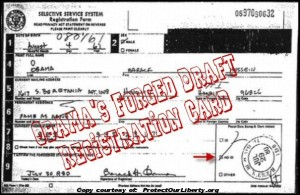


 An election for President and Commander in Chief of the Military must strive to be above reproach. Our public institutions must give the public confidence that a presidential candidate has complied with the election process that is prescribed by our Constitution and laws. It is only after a presidential candidate satisfies the rules of such a process that he/she can expect members of the public, regardless of their party affiliations, to give him/her the respect that the Office of President so much deserves.

I disagree, somewhat. It's not just the Dems. A lot of the Repubs are in the same boat as the Dems.
ReplyDelete