
| Friday, May 13, 2011
INDIANAPOLIS | Overturning a common law dating back to the English Magna Carta of 1215, the Indiana Supreme Court ruled Thursday that Hoosiers have no right to resist unlawful police entry into their homes.
In a 3-2 decision, Justice Steven David writing for the court said if a police officer wants to enter a home for any reason or no reason at all, a homeowner cannot do anything to block the officer's entry.
"We believe ... a right to resist an unlawful police entry into a home is against public policy and is incompatible with modern Fourth Amendment jurisprudence," David said. "We also find that allowing resistance unnecessarily escalates the level of violence and therefore the risk of injuries to all parties involved without preventing the arrest."
David said a person arrested following an unlawful entry by police still can be released on bail and has plenty of opportunities to protest the illegal entry through the court system.

The court's decision stems from a Vanderburgh County case in which police were called to investigate a husband and wife arguing outside their apartment.
When the couple went back inside their apartment, the husband told police they were not needed and blocked the doorway so they could not enter. When an officer entered anyway, the husband shoved the officer against a wall. A second officer then used a stun gun on the husband and arrested him.
Professor Ivan Bodensteiner, of Valparaiso University School of Law, said the court's decision is consistent with the idea of preventing violence.
"It's not surprising that they would say there's no right to beat the hell out of the officer," Bodensteiner said. "(The court is saying) we would rather opt on the side of saying if the police act wrongfully in entering your house your remedy is under law, to bring a civil action against the officer."
Justice Robert Rucker, a Gary native, and Justice Brent Dickson, a Hobart native, dissented from the ruling, saying the court's decision runs afoul of the Fourth Amendment of the U.S. Constitution.
READ MORE...


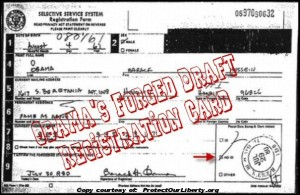


 An election for President and Commander in Chief of the Military must strive to be above reproach. Our public institutions must give the public confidence that a presidential candidate has complied with the election process that is prescribed by our Constitution and laws. It is only after a presidential candidate satisfies the rules of such a process that he/she can expect members of the public, regardless of their party affiliations, to give him/her the respect that the Office of President so much deserves.

Wow ! You sure have done a great effort putting these websites in place. These tools sure are of great help. russian marriage
ReplyDelete